
Poetry is a powerful tool used by marginalized communities for centuries to express their sorrows, happiness, and unique experiences. Palestinian …
5 Must-Read Poetry Collections by Palestinians
Poetry is a powerful tool used by marginalized communities for centuries to express their sorrows, happiness, and unique experiences. Palestinian …
5 Must-Read Poetry Collections by Palestinians
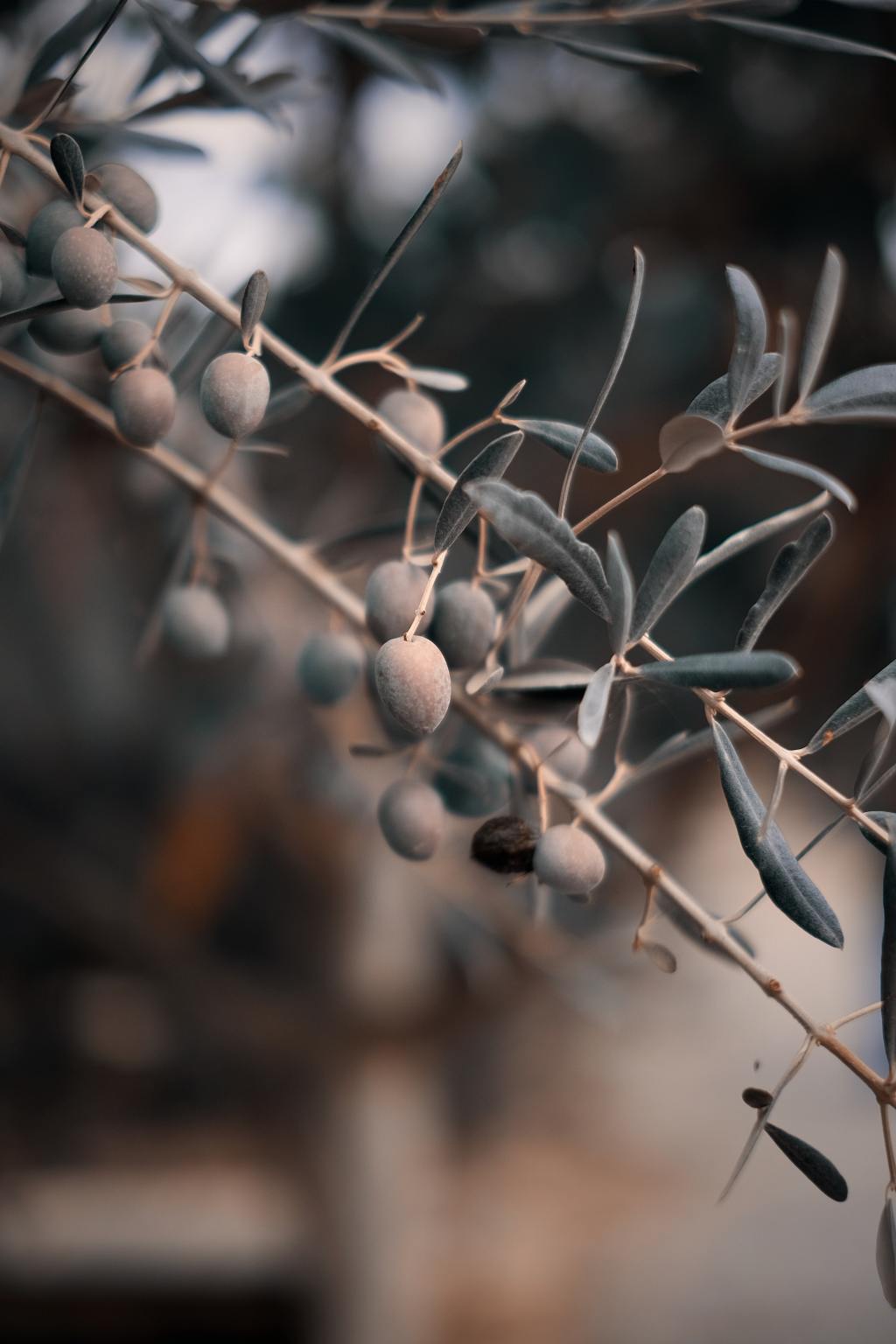
April is ARAB-AMERICAN HERITAGE MONTH in America. To honor my heritage, I chose to share some Poetry of resistance from occupied Palestine, today.
TRANSLATED BY SULAFA HIJJAWI
Published by the Ministry of Culture
Baghdad- Iraq 1968
This is a revised and edited version- 2009
THE OLIVE TREE
 by, Tawfiq Zayyad

 Because I do not knit wool*
 Because I am always hunted
 And my house is always raided.
 Because I cannot own a piece of paper,
 I shall carve my memoirs
 On the home yard olive tree.

 I shall carve bitter reflections,
 Scenes of love and yearnings,
For my stolen orange grove
And the lost tombs of my dead.

I shall carve all my strivings
For the sake of remembrance
For the time when I’ll drown them
In the avalanche of triumph

I shall carve the serial number
Of every stolen piece of land
The place of my village on the map
And the blown up houses,
And the uprooted trees
 And every bloom that was crushed
 And all the names of the experts in torture
 The names of the prisons…..

 I shall carve dedications
 To memories threading down to eternity
 To the blooded soil of Deir Yasin
 And Kufur Qassem.
 I shall carve the sun’s beckoning
 And the moon’s whisperings
 And what a skylark recalls
 At a love deserted well.

 For the sake of remembrance,
 I shall continue to carve
 All the chapters of my tragedy
 And all the stages of Al- Nakbah
 On the home yard olive tree!


* Reference to Madame Lafarge, who used to knit the names of the traitors
and send them to the French revolutionaries during the French Revolution.

Hmmm…It seems misplaced
I know you want to- EXPLODE ME – into my place
Yet, there’s something missing
I can’t put my finger on it, but it’s
screaming so loudly
into this space
Where can you find the words?
Words to grab me, hold me
in your most compelling embrace
Words that come pouring from
the depths of your most
descriptive place
You see- I believe you are holding back
Holding back the crowds
the images, rushing the gate
the words of poets trying to escape, years
of exile from their place, their homes
their words, their ancestors
beating their tongues, their drums
their words
return- return, return, return!
Can’t you be more descriptive than that?
I’m losing my taste
Your words just seem so
out of place
These words of your ancestors,
overwhelm my ability, to grasp
control, control of their
proper place,
these ancestors, these poets
who speak so eloquently
need to remember, their rightful
place
Places misspelled, covering the trace
of words, so right, so worn, worn with words
lacking in grace
You see- Can’t you be more descriptive please?
But with taste, taste my place
this is where the words should come from
Those ancestors are all wrong, they all belong
In captivity! Capture their song
Your words are stifled, not strong
But, I see a flower waiting to bloom
Your words are steeped in a sadness that
has longed, for sweet freedom
Your words are imprisoned
your words are all wrong
Can’t you be more descriptive please?
Scholarly words, smart words, words
of intellect. There is no place for your words in this
world. If you forget those poets, those ancestors
of primitive place, perhaps
Perhaps, we can embrace- most certainly embrace
Your words would make sense
EXPLODE in my face
Words of descriptive meaning would trace
a grid for me to embrace, most certainly embrace.
I don’t understand that place
where our ancestors have been driven
Driven behind those gates
Of HELL
Their words beaten back by captivity
Can’t you be more descriptive
than that?
©Jay Mora-Shihadeh
Photo by Khaled Reese from Pexels
#Poetry #Ancestry #Exile
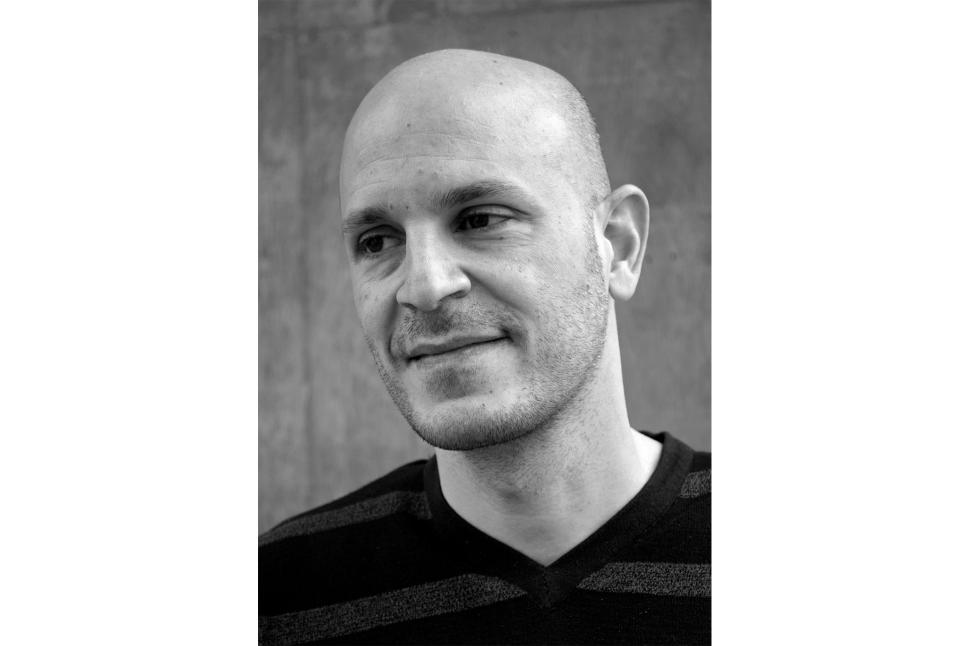
Photo by Cybele Knowles
To follow up from last week’s post about poet Mahmoud Darwish ( read Post ) This post is about the poet, who translated Darwish’s Poetry. Fady Joudeh, a Palestinian American poet and Physician, has translated several of Darwish’s Poems.
Joudeh lives with his family in Houston, Texas where he practices Internal Medicine.
“Joudah translated several collections of Palestinian poet Mahmoud Darwish’s work in The Butterfly’s Burden (2006), which won the Banipal prize from the UK and was a finalist for the PEN Award for Poetry in Translation; and in If I Were Another, which won a PEN USA award in 2010. His translation of Ghassan Zaqtan‘s Like a Straw Bird It Follows Me (2012) won the Griffin International Poetry Prize in 2013. His other translations include Amjad Nasser‘s Petra: The Concealed Rose and A Map of Signs and Scents.” PoetryFoundation.org
BY FADY JOUDAH
At a desk made of glass,
In a glass walled-room
With red airport carpet,
An officer asked
My father for fingerprints,
And my father refused,
So another offered him tea
And he sipped it. The teacup
Template for fingerprints.
My father says, it was just
Hot water with a bag.
My father says, in his country,
Because the earth knows
The scent of history,
It gave the people sage.
I like my tea with sage
From my mother’s garden,
Next to the snapdragons
She calls fishmouths
Coming out for air. A remedy
For stomach pains she keeps
In the kitchen where
She always sings.
First, she is Hagar
Boiling water
Where tea is loosened.
Then she drops
In it a pinch of sage
And lets it sit a while.
She tells a story:
The groom arrives late
To his wedding
Wearing only one shoe.
The bride asks him
About the shoe. He tells her
He lost it while jumping
Over a house-wall.
Breaking away from soldiers.
She asks:
Tea with sage
Or tea with mint?
With sage, he says,
Sweet scent, bitter tongue.
She makes it, he drinks.
Fady Joudah, “The Tea and Sage Poem” from The Earth in the Attic. Copyright © 2008 by Fady Joudah. Reprinted by permission of Yale University Press.Source: The Earth in the Attic (Yale University Press, 2008)
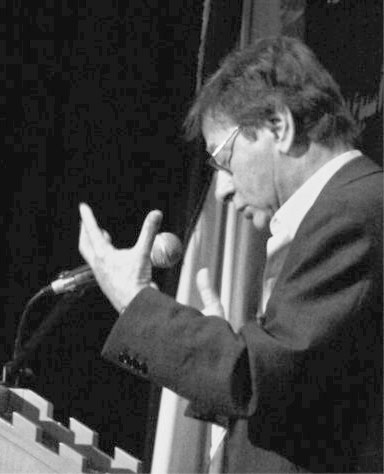
Two great Poems today- With a Highlight on Palestinian Poet, Mahmoud Darwish-
I periodically turn to poets from my heritage and am always reminded and delighted by the deep roots we have as Palestinian’s in the art forms of Spoken Word, Storytelling and Poetry.
This first Poem is one of his early ones, circa 1964 and the second poem below it, circa 2008.
| Identity CardMahmoud Darwish – 1964 Write down! I am an Arab And my identity card number is fifty thousand I have eight children And the ninth will come after a summer Will you be angry? Write down! I am an Arab Employed with fellow workers at a quarry I have eight children I get them bread Garments and books from the rocks.. I do not supplicate charity at your doors Nor do I belittle myself at the footsteps of your chamber So will you be angry? Write down! I am an Arab I have a name without a title Patient in a country Where people are enraged My roots Were entrenched before the birth of time And before the opening of the eras Before the pines, and the olive trees And before the grass grew My father.. descends from the family of the plow Not from a privileged class And my grandfather..was a farmer Neither well-bred, nor well-born! Teaches me the pride of the sun Before teaching me how to read And my house is like a watchman’s hut Made of branches and cane Are you satisfied with my status? I have a name without a title! Write down! I am an Arab You have stolen the orchards of my ancestors And the land which I cultivated Along with my children And you left nothing for us Except for these rocks.. So will the State take them As it has been said?! Therefore! Write down on the top of the first page: I do not hate poeple Nor do I encroach But if I become hungry The usurper’s flesh will be my food Beware.. Beware.. Of my hunger And my anger! |
BY MAHMOUD DARWISHTRANSLATED BY FADY JOUDAH
A stranger on the riverbank, like the river … water
binds me to your name. Nothing brings me back from my faraway
to my palm tree: not peace and not war. Nothing
makes me enter the gospels. Not
a thing … nothing sparkles from the shore of ebb
and flow between the Euphrates and the Nile. Nothing
makes me descend from the pharaoh’s boats. Nothing
carries me or makes me carry an idea: not longing
and not promise. What will I do? What
will I do without exile, and a long night
that stares at the water?
Water
binds me
to your name …
Nothing takes me from the butterflies of my dreams
to my reality: not dust and not fire. What
will I do without roses from Samarkand? What
will I do in a theater that burnishes the singers with its lunar
stones? Our weight has become light like our houses
in the faraway winds. We have become two friends of the strange
creatures in the clouds … and we are now loosened
from the gravity of identity’s land. What will we do … what
will we do without exile, and a long night
that stares at the water?
Water
binds me
to your name …
There’s nothing left of me but you, and nothing left of you
but me, the stranger massaging his stranger’s thigh: O
stranger! what will we do with what is left to us
of calm … and of a snooze between two myths?
And nothing carries us: not the road and not the house.
Was this road always like this, from the start,
or did our dreams find a mare on the hill
among the Mongol horses and exchange us for it?
And what will we do?
What
will we do
without
exile?
Mahmoud Darwish, “Who Am I, Without Exile?” from The Butterfly’s Burden. Copyright © 2008 by Mahmoud Darwish, English translation by Fady Joudah. Reprinted by permission of Copper Canyon Press. http://www.coppercanyonpress.orgSource: The Butterfly’s Burden (Copper Canyon Press, 2007)
Photo credit- Wikipedia
#Poetry #MahmoudDarwish #Palestine

